What Alzheimer's Disease Is, and What It Is Not

When your mom starts losing the thread of a story she just finished, people often use three words as if they were one. Old age. Dementia. Alzheimer's. They are not the same. Families mix them because the changes feel close and the language has blurred. Here is a clean line you can use to explain the difference to your sister, your adult child, or the friend who says everyone forgets things.
Two Words Families Mix Up
Dementia Is the Set of Symptoms
Dementia is an umbrella term. It describes a loss of the ability to think, remember, and reason that is serious enough to interfere with daily life and activities. It is not one disease. Different conditions in the brain can produce the same set of symptoms. Some people also see changes in mood, behavior, or personality. The symptoms worsen over time because the brain changes continue.[2]
Alzheimer's Is a Disease That Causes Them
Alzheimer's disease is the most common disease that causes those dementia symptoms. It accounts for 60 to 80 percent of dementia cases.[3] It is a brain disorder that slowly destroys memory and thinking skills, and later other abilities, until everyday life is affected.[1]
The disease is progressive, which means it worsens over time. For most people, symptoms first appear in their mid-60s.[1] Younger-onset Alzheimer's exists and is less common. It can appear before age 65.[3]
Your loved one is still your husband, your wife, your mom, or your dad. The disease explains changes in how their brain works. It does not erase who they are.
What the Disease Does
New Memories Often Go First
The most common early symptom is trouble remembering newly learned information. That happens because the disease typically starts in the parts of the brain involved in learning. Your mom may ask the same question a few minutes later. She may struggle with a recipe she has made for decades. Older memories can stay clearer for a while.[3]
Later the disease can affect language, judgment, and the ability to handle simple tasks.[1] Eventually people may lose the ability to carry on a conversation or respond to what is happening around them. Speaking, swallowing, and walking can become difficult.[3] These later changes are part of the progressive course. They do not arrive on a fixed schedule for any family.
Plaques, Tangles, and Cells That Stop Connecting
Inside the brain, abnormal clumps of proteins build up. These are often called plaques and tangles. They disrupt the usual work of those cells.[1]
A neuron is a brain cell that sends messages to other cells. With Alzheimer's, many neurons stop working properly, lose their connections, and eventually die. The areas that handle learning and new memories are often hit early. That is why fresh information is the first to slip. Other areas are affected later.[1]
These changes begin years before symptoms appear. Some of them can be seen during life with a PET scan. A scan is one tool a clinician may use. It is not a home test.[2]
What It Is Not
Not Ordinary Aging

Forgetting the name of someone you just met, then recalling it later, can be ordinary. Misplacing keys and finding them later can be ordinary. Alzheimer's is not ordinary aging. It is a disease in which brain cells malfunction and die. The result is a change that disrupts daily life, not a minor slip that rights itself.[4]
Age is the biggest known risk factor.[1] Risk rises as people get older. Risk is not the same as a normal fate. About one-third of people age 85 or older may have some form of dementia, yet not everyone develops it. Not everyone develops dementia as they grow older.[2]
Not Senility
"Senile" or "senile dementia" was an old way of saying serious decline was simply what happens with age. The word was a mistake. It mixed a disease with the ordinary process of growing older. Families who still use it are not being unkind. They are using the language they were given. The clearer words are dementia for the symptoms and Alzheimer's for the most common disease that causes them.[2]
Not Only a Memory Problem
Memory trouble is often the first thing families notice. The disease can also affect language, judgment, mood, and behavior. Your mom may have trouble finding words. She may make decisions that do not fit who she has always been, or seem restless or withdrawn. These changes come from the same brain process. They are not separate problems.[1]
Other Causes, in One Pass
Vascular, Lewy Body, and Frontotemporal
Other diseases can cause dementia symptoms. Vascular disease involves changes in the blood vessels that supply the brain. Lewy body disease involves abnormal deposits of a protein called alpha-synuclein. Frontotemporal degeneration affects the front and side areas of the brain and can show up with changes in behavior or language, sometimes at younger ages. Each has its own pattern. A clinician sorts them.[2]
Mixed Dementia
Mixed dementia means more than one of these brain changes is present at the same time. Your loved one might have the plaques and tangles of Alzheimer's along with vascular changes, for example. Mixed dementia is common enough that families should not be surprised if a clinician names more than one cause.[1]
Not everyone who has dementia has Alzheimer's. Not everyone who is older has dementia.
Myths Worth Retiring
Common Ideas That Are Not True
Memory loss is not simply a natural part of aging. Occasional slips can be ordinary. Alzheimer's is a disease in which cells fail and die.[4]
Alzheimer's and dementia are not the same word. Dementia is the umbrella of symptoms. Alzheimer's is the most common disease that produces them.[4]
The disease is not contagious. You cannot catch it from spending time with your mom the way you catch the flu or chickenpox.[5]
Flu shots and other vaccines have not been linked, in published studies, to an increased risk of dementia.[4]
No single food or supplement has been shown to prevent, treat, or cure Alzheimer's or other dementia.[4]
Aluminum cookware was once suspected. Studies have failed to confirm any role for aluminum, and most experts believe it does not pose any threat.[6]
Only a Clinician Can Sort the Causes
No article can say whether your loved one has Alzheimer's or another cause of dementia. Many conditions can affect thinking, and some can be reversed. Only a clinician can sort the causes for your mom.[4]
If changes worry you, the Alzheimer's Association's page on 10 early signs is a reason to book a visit, not a checklist to score at the kitchen table.[7]
Your Loved One Is Still Your Loved One
A Change Explained, Not an Identity Erased
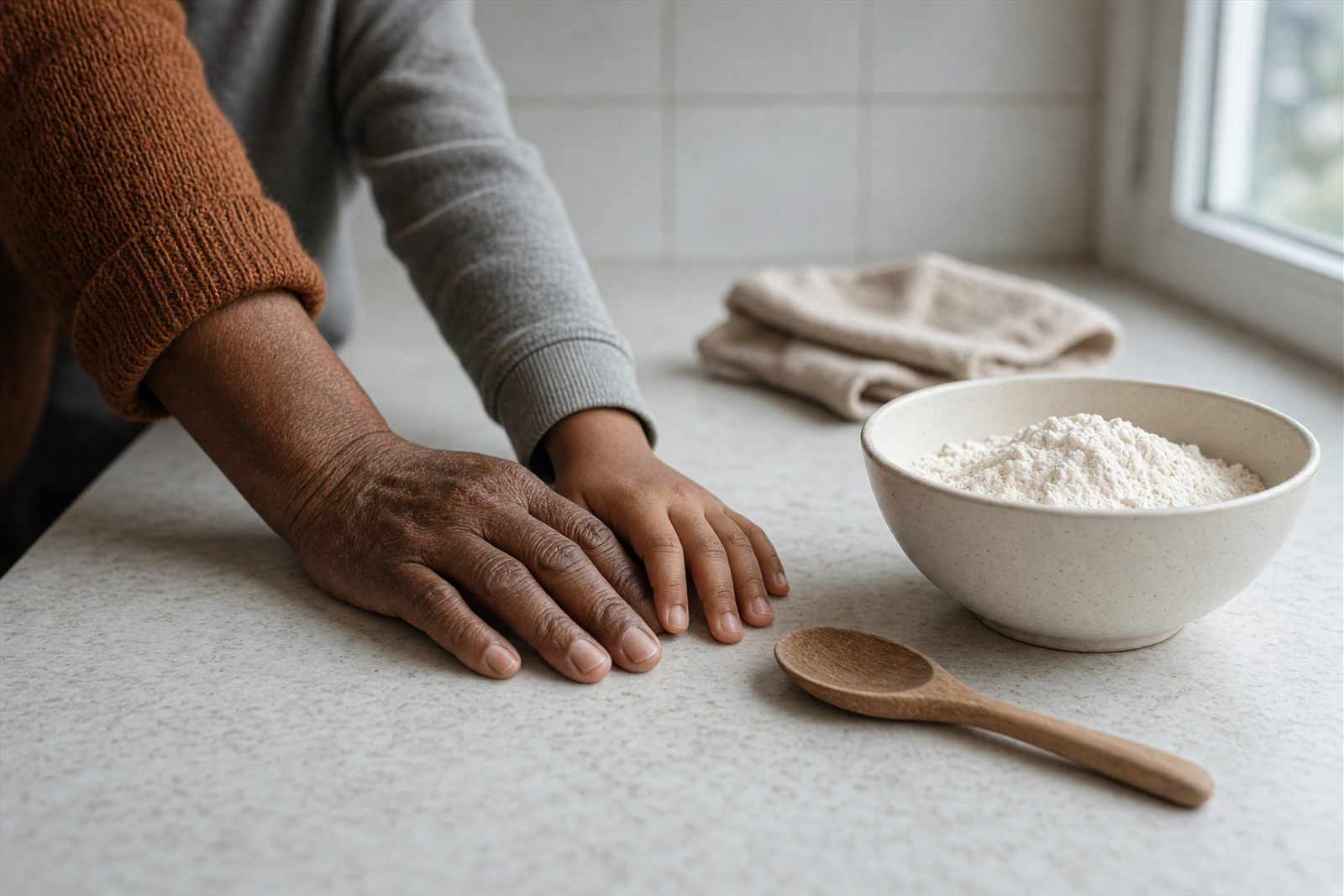
Your mom who taught you to drive is still your mom. She is still the person who always noticed when you needed a quiet evening. The disease explains why new memories slip or why a familiar route becomes confusing. It does not turn them into only a patient.
A grandchild might ask, "Is Grandma senile now?" You can answer, "No. Senile was an old word people used when they thought serious memory loss was just part of getting old. Grandma may have a brain disease called Alzheimer's. It causes dementia symptoms. She is still your grandmother."
When to See a Clinician
A change that disrupts daily life is a reason to see a clinician. Ordinary forgetfulness is not. A clinician can help sort out what is happening.
Sources
- National Institute on Aging. What Is Alzheimer's Disease? Content reviewed March 4, 2025. https://www.nia.nih.gov/health/alzheimers-and-dementia/what-alzheimers-disease
- Alzheimers.gov. What Is Dementia? Last updated June 17, 2026. https://www.alzheimers.gov/alzheimers-dementias/what-is-dementia
- Alzheimer's Association. Dementia vs. Alzheimer's Disease: What Is the Difference? https://www.alz.org/alzheimers-dementia/difference-between-dementia-and-alzheimer-s
- Alzheimer's Association. Myths. https://www.alz.org/alzheimers-dementia/what-is-alzheimers/myths
- Alzheimer's Association. Talking to Kids About Alzheimer's and Dementia. https://www.alz.org/help-support/resources/kids/talking-kids-about-dementia
- Alzheimer's Association. What Causes Alzheimer's Disease? https://www.alz.org/alzheimers-dementia/what-is-alzheimers/causes-and-risk-factors
- Alzheimer's Association. 10 Early Signs and Symptoms of Alzheimer's & Dementia. https://www.alz.org/alzheimers-dementia/10_signs